

Quick answer
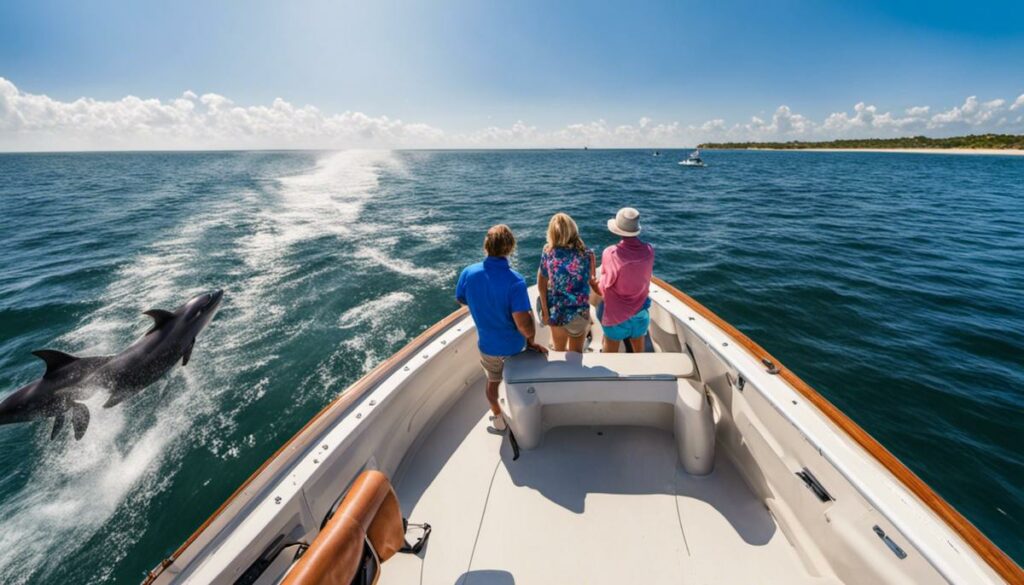
No, you cannot swim with dolphins in Myrtle Beach. The Marine Mammal Protection Act prohibits any activity that harasses, pursues, or attempts to interact with wild dolphins in U.S. waters, including swimming alongside them. South Carolina enforces these federal protections strictly along the Grand Strand. Authorized dolphin cruises offer close observation from the boat, typically within 50 yards, without entering the water.
Atlantic bottlenose dolphins patrol the waters off Myrtle Beach year-round, their populations swelling during spring and summer as baitfish migrate north along the coast. Pods of eight to fifteen individuals are common in the nearshore zone between the beach and the three-mile line, where tidal channels and sandbars create ideal hunting grounds. Federal wildlife protections classify these dolphins as a protected species, and the prohibition on swimming with them reflects decades of research showing that human contact disrupts feeding, breeding, and resting behavior. The question of whether you can swim with dolphins in Myrtle Beach often arises because other coastal destinations market captive dolphin encounters in controlled lagoons. Myrtle Beach has no such facilities. All dolphins visible from shore or accessible by boat are wild animals under federal jurisdiction, and approaching them in the water carries penalties that include fines up to ten thousand dollars and potential criminal charges. The fifty-yard rule—a buffer enforced by the National Marine Fisheries Service—applies to swimmers, paddleboarders, and kayakers as well as motorized vessels. Boat-based dolphin cruises operate daily from March through October, departing from marinas along the Intracoastal Waterway and the Murrells Inlet estuary. Licensed operators know the tidal patterns and feeding zones where dolphins surface predictably, often within thirty yards of the boat. These cruises last ninety minutes to two hours and follow routes that maximize sightings without violating approach distance regulations. Passengers remain on deck throughout the trip, and captains cut engines when dolphins are nearby to avoid propeller strikes. The Grand Strand's dolphin population is resident rather than migratory, meaning the same individuals appear in local waters across seasons. Biologists estimate that roughly four hundred dolphins inhabit the coastal zone between Pawleys Island and Little River, their movements dictated by prey availability rather than temperature. Early morning and late afternoon outings align with peak feeding activity, when dolphins herd mullet and menhaden into shallow water. Observers willing to accept a boat-only experience can expect reliable encounters without the ecological and legal complications that swimming with wild dolphins would entail.
“Federal protections prohibit any water-based interaction with wild dolphins along the South Carolina coast, making boat tours the only compliant option.”
Pricing Facts: Can You Swim With Dolphins in Myrtle Beach?
Swimming with dolphins is not available in Myrtle Beach, so there are no admission fees for this activity. Dolphin boat tours are provided by independent operators at their own set prices.
There is no cost to swim with dolphins because the activity is not permitted; visitors typically pay for separate boat tour experiences.
Best Time to Visit for Wildlife Viewing Since You Cannot Swim With Dolphins in Myrtle Beach
The most effective time for dolphin viewing in Myrtle Beach is during the warmer months of late spring through early autumn, when marine activity is at its peak. Please note that swimming with dolphins is not permitted in Myrtle Beach; only boat tours are available.
May to June
Moderate; school is in sessionHigh 70s to low 80s Fahrenheit
Dolphins are active as water temperatures rise. Tours operate with higher frequency during these months.
July to August
Highest; peak tourism seasonHigh 80s to low 90s Fahrenheit
Wildlife is abundant, though mid-day boat tours can be hot. Early morning departures are recommended to avoid peak heat.
September to October
Lower; post-summer declineHigh 70s to low 80s Fahrenheit
Water remains warm enough for active dolphin pods. Crowds are thinner, making this a practical window for viewing.
Verdict: The best time to visit is during morning hours from May through June or September through October for optimal wildlife viewing conditions.
Tips for Wildlife Enthusiasts: Can You Swim With Dolphins in Myrtle Beach?
Understanding how to observe dolphins responsibly ensures a high-quality experience while respecting marine life regulations.
Verify operator certifications
Check if the boat company follows NOAA guidelines for marine mammal observation and maintains a safe distance from pods. Operators adhering to these standards prioritize the health of the animals over close-contact encounters.
Observe from the deck
Expect to view dolphins from the boat rather than in the water, as swimming with them is not permitted. Keep your camera ready and focus on spotting dorsal fins breaking the surface near the vessel.
Choose smaller vessels
Select smaller boat tours if you prefer a more personal experience with fewer passengers on board. Smaller groups often allow for better visibility and less engine noise, which can make dolphins more likely to remain in the area.
Time your arrival
Plan to arrive at the departure point well ahead of your scheduled cruise to complete check-in procedures without rush. Consistent departure times help captains navigate around changing tidal conditions.
Prioritize ethical engagement
Understand that wild dolphins are unpredictable and sightings are never guaranteed. Reputable captains will position the boat to allow natural movement rather than chasing or harassing the animals.
Check availability
Frequently Asked Questions About Swimming with Dolphins in Myrtle Beach
Everything you need to know about can you swim with dolphins in myrtle beach